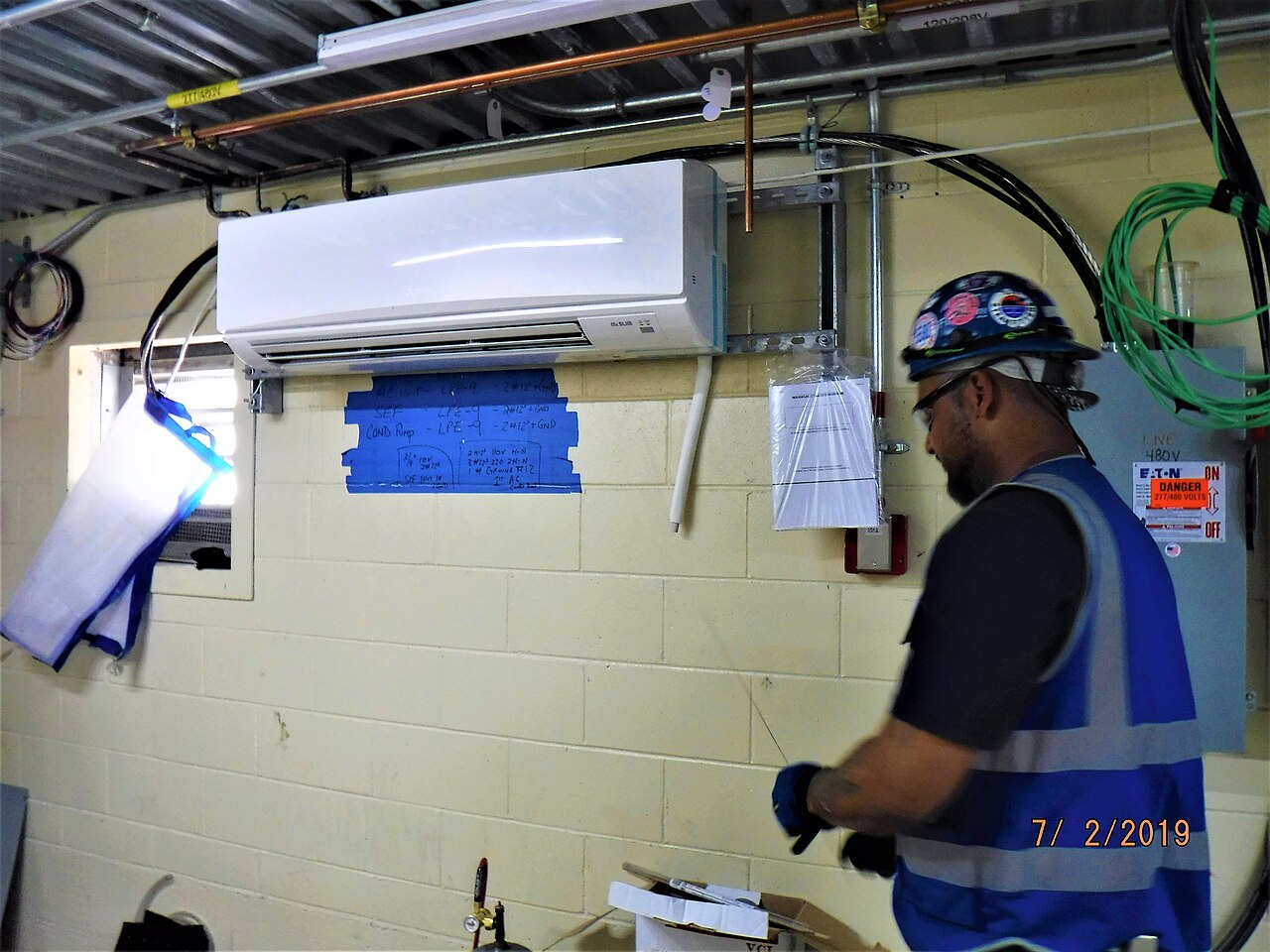
Picture a Saturday in October, the air still thick with South Florida humidity, and your AC has been running nonstop since morning. You walk out to the side of the house in Coral Gables and notice a puddle spreading across the patio pavers — right where the little white PVC pipe from your air handler drains. Water is supposed to trickle out of that pipe and away from the house. Instead, it's pooling, and inside, a safety switch may soon kill your AC entirely to protect the ceiling from flooding. That little pipe is the condensate line, and when it clogs, a five-minute fix with a wet/dry vac can save you a panicked service call.
What the condensate line actually does
Your AC doesn't just cool the air — it wrings water out of it, the same way a cold drink sweats on a humid day. That water collects on the indoor evaporator coil and drips into a drain pan, and the condensate line is the pipe that carries it outside or to a drain. In Miami-Dade, a system can pull several gallons of water out of the air on a single October afternoon. The line is narrow — usually just ¾-inch PVC — so it doesn't take much to block it: a little algae, some dust, a bit of sludge, and suddenly the water has nowhere to go.
How you know it's clogged before it becomes a mess
The most common early sign is your AC shutting itself off for no apparent reason. Many South Florida systems have a float switch in the drain pan — a small device that works like the float in a toilet tank. When backed-up water lifts the float, it cuts power to the unit to keep the pan from overflowing into your ceiling or closet. So "the AC stopped and the thermostat is blank" on a humid week is often a clogged drain line, not a dead system. Other signs: water staining on the ceiling below the air handler, a musty smell near the indoor unit, or that puddle forming where the line should be draining.
What you'll need
You don't need much: a wet/dry vacuum with the filter removed or set for wet pickup (check your vac's manual — running it in dry mode on water can ruin the filter and the motor), a rag or towel, and a cup of clean water for testing afterward. That's it. No chemicals, no special tools.
Step-by-step: flushing the line with the vac
1. Shut the system down. Turn the thermostat to OFF and flip the breaker's AC switch. You're working around water and electricity — a central AC is hardwired, not wall-plugged, so the breaker is your off switch.
2. Find the drain line's exit. Go outside and look for a white PVC pipe, usually near the outdoor unit or along the side of the house, often dripping into a small splash area or flower bed. That's the end you'll work from — it's easier than opening the indoor unit.
3. Make the seal. Hold the vac hose against the pipe opening and wrap a rag around the joint to close the gaps. You don't need it airtight — think of it like putting your hand over a straw to block the airflow. The goal is to force the vacuum's suction down the pipe instead of pulling air in around the edges.
4. Run the vac for 30–60 seconds. You'll usually hear the tone of the vacuum change as the clog breaks loose, and you may see dark water and sludge hit the vac's tank. That gunk — algae and dust glued together — is what was blocking the line.
5. Test it. Inside, find the small T-shaped vent or cap on the drain line near the air handler (many installs have one for exactly this purpose). Pour a cup of water in. It should flow straight through and out the outdoor end within seconds. If it backs up, repeat the vacuum step once more.
6. Power back up. Restore the breaker, set the thermostat back to cool, and check that water is draining normally outside over the next hour.
Why suction beats blowing (and why chemicals are a bad idea)
Some folks try blowing the line out with a leaf blower or compressed air from the outside end. That can push the clog deeper — or blast sludge backward into the drain pan, which puts you right back where you started. Suction pulls the blockage out toward you instead. And skip the bleach or drain cleaner: harsh chemicals can damage the PVC glue joints and the drain pan, and they do nothing about the sludge cake already lining the pipe. Plain suction plus a water test is the method techs use, and it's the gentlest thing that actually works.
Keeping it clear so you don't do this every month
A clogged line is a maintenance problem, not a mystery. In our climate, flushing the line every couple of months during cooling season keeps the algae from getting a foothold. If your indoor line has an access vent, pouring a cup of plain water through it now and then lets you spot a slow drain before the float switch kills the AC on the hottest Saturday of the month. If the line clogs again within weeks, though, that's a sign of a bigger issue — a sagging pipe, a cracked pan, or growth deep inside — and that's a job for a pro with a camera and the right cleaning tools.
The video walks through the same wet/dry vac technique this guide covers: shutting the system down, sealing the vacuum hose to the condensate drain line, and using suction to pull the clog out. Watch it once before you start so the steps feel familiar when you're standing at the pipe with the vac in your hand — seeing the hose positioning and hearing how the vacuum sounds when the blockage clears makes the whole job less guesswork.
When to call us
DIY is great, but some jobs need a pro. If the line clogs again quickly, you see water damage around the air handler, or you'd rather have an expert handle it, call (786) 949-9255 — South Florida AC Sanitation serves Miami-Dade County (Mon-Sat 8AM-8PM). No pressure, no upsells.
← Back to Blog