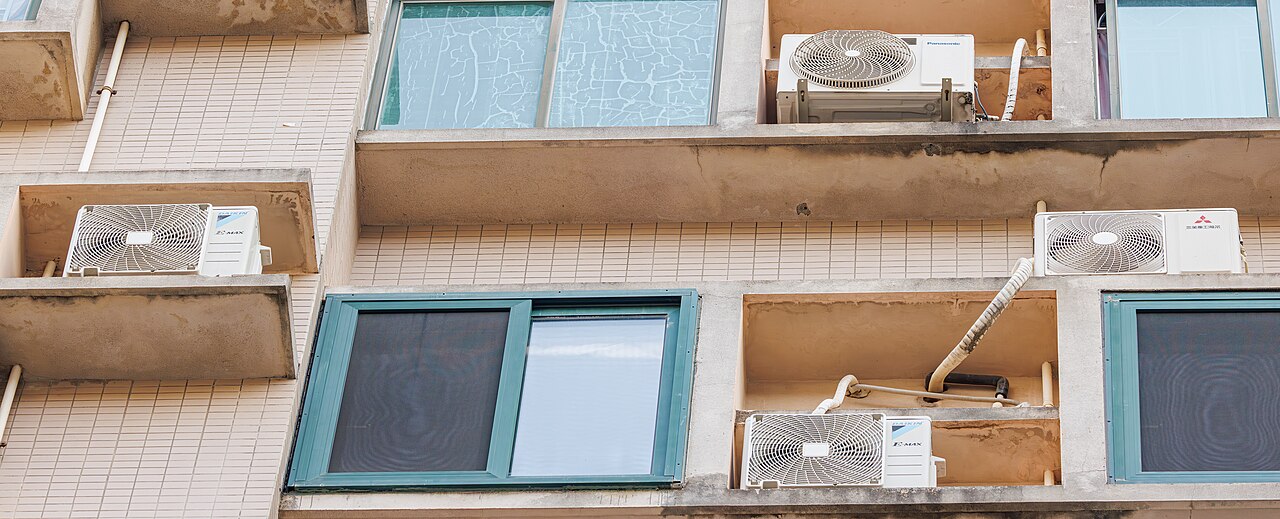
 The afternoon sun beats down on a condenser unit behind a house on Southwest 112th Avenue in Kendall. The homeowner notices the AC running longer than usual, the air from the vents feeling warmer each hour. They walk around back and see it — rows of aluminum fins crushed flat where a palm frond whipped against the coil during last week's storm. The metal looks like a comb someone sat on. The fan still spins, but the heat isn't leaving the coil. That bent section is choking the system.
Bent condenser fins block airflow through the outdoor coil, making your AC run longer and cool less. A fin comb matched to your coil's fins-per-inch (usually 8 to 14 FPI) straightens them in minutes — turn off power, clean debris first, then comb gently in the direction the fins run. Most residential coils need an 8–12 FPI comb; check the rating plate or count ten fins and measure the width.
What are condenser fins and why do they bend?
The condenser coil sits inside the metal cabinet of your outdoor unit. Thin aluminum fins surround the refrigerant tubes, spaced close together — typically 8 to 14 fins per inch. Their job is to pull heat off the hot refrigerant and dump it into the air the fan blows through. When fins bend, they close the gaps air moves through. Less air means less heat leaves the coil. The compressor works harder, runs longer, and your electric bill climbs. Fins bend from lawn mowers kicking up stones, kids leaning bikes against the cabinet, hurricane debris, or just age. In South Florida, salt air makes the aluminum brittle. A fin that's survived five summers might fold over from a light tap that wouldn't have hurt it in year one.How do I know if my fins are bent enough to hurt performance?
Look at the coil through the louvers or remove the top grille (four to six screws, usually 5/16-inch hex). Shine a flashlight across the face. You're looking for sections where the silver lines disappear into a gray blur — that's fins folded against each other. If you can slide a credit card between rows, airflow is probably fine. If the card stops, that section is blocked. A 20-degree split between return air and supply air is the quick field check. Measure at the filter grille and the closest vent. If the split drops below 16 degrees on a 90-degree day, restricted airflow is a top suspect.What fin comb do I need for my unit?
Fin combs come in sets with six or eight heads, each marked for a specific fins-per-inch count. Common residential sizes: 8, 9, 10, 11, 12, 14 FPI. Commercial units sometimes run 16 or 18 FPI. To find yours, locate the rating plate on the cabinet side — it lists model and serial. The FPI isn't always printed there. Easiest method: count ten fins, measure that width in inches, divide ten by the measurement. Example: ten fins span 0.9 inch. Ten divided by 0.9 equals 11.1 — you need an 11 FPI comb. If you'd rather not measure, buy a universal set ($12–$18 at any hardware store). The heads snap onto a handle. Pick the head that slides into the fins without forcing.How do I straighten the fins without making it worse?
First, kill power at the disconnect box on the wall next to the unit. Pull the handle or remove the fuses. Verify the fan doesn't spin when you nudge it. Brush loose dirt off with a soft nylon brush — a clean paintbrush works. Vacuum the coil face with a shop vac on low suction. Wet fins tear easier. Hold the comb head flat against the coil face. Align the teeth with the fin channels. Push straight in, then pull straight out. One pass per section. Don't wiggle. Don't push hard. The aluminum is thin — about the thickness of a soda can wall. If you feel resistance, stop. You're either on the wrong FPI head or hitting a tube. Work in small patches, maybe six inches wide. Step back every minute. The straightened rows should catch light evenly, like venetian blinds tilted open.Can I use a butter knife or screwdriver instead?
You can, but you'll likely create more damage than you fix. A knife blade is thicker than a fin gap. It pries fins apart unevenly, leaving waves that still block air. A fin comb's teeth are ground to match the exact spacing. Each tooth supports the fins on both sides as it passes through. The result is flat, parallel rows. If you're in a bind and the hardware store is closed, a plastic putty knife (the flexible 1.5-inch kind) works better than metal. Slide it down a single channel. But buy the comb before the next heat wave. The video below comes from DIY channel ZipZapDIY and shows the fin-straightening process on a real residential condenser — working a fin straightener through bent, mashed sections of the coil and checking the airflow improvement afterward. It is a good visual companion to the steps above: match your FPI, work in smooth passes, and keep the tool flat against the coil face.What if the fins are torn or missing chunks?
Combing only works on bent metal. Torn fins — where the aluminum has ripped away from the tube — don't come back. Missing chunks mean refrigerant tubes are exposed. That section won't transfer heat. If more than 20 percent of the coil face is torn or gone, the coil needs replacement. A tech can measure the exact loss with a coil calculator. Small tears (under a quarter-inch) can be sealed with epoxy made for aluminum HVAC coils. It's a temporary fix, maybe one to two seasons in our humidity. Large tears mean the system loses capacity every run cycle.How often should I check the fins?
Once a year, before cooling season peaks. In Miami-Dade, that's March. Add a check after any named storm or if you see debris piled against the cabinet. The whole job takes about fifteen minutes — a small habit that keeps your system breathing easy through the hottest months.When to call us
DIY is great, but some jobs need a pro. If the problem persists, you spot anything dangerous, or you'd rather have an expert handle it, call (786) 949-9255 — South Florida AC Sanitation serves Miami-Dade County (Mon-Sat 8AM-8PM). No pressure, no upsells.
← Back to Blog